
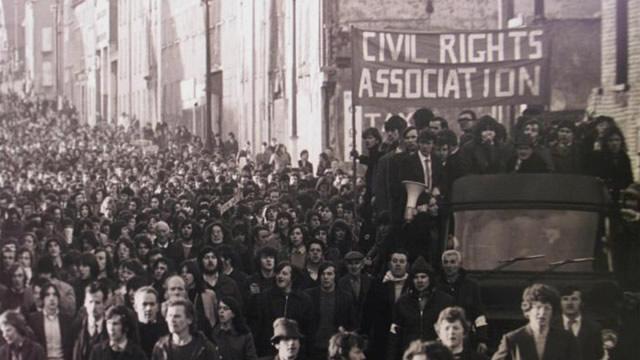
A father-of-nine shot and wounded on Bloody Sunday in Derry never worked again because his life “fell apart”, the High Court heard today.
Counsel for the family of Daniel McGowan argued damages should be awarded for his loss of earnings and wrongful vilification.
Karen Quinlivan KC also insisted British soldiers who opened fire on January 30, 1972 put him through a terrifying ordeal.
“An entirely innocent man was shot in the street in public, humiliating circumstances when he posed no threat whatsoever and was seeking cover,” she said.
Thirteen unarmed people were killed and several others injured when members of the Parachute Regiment opened fire at a civil rights demonstration in the city.
Mr McGowan, who died in 2004 at the age of 69, suffered a serious leg wound during events on Bloody Sunday.
In 2010 the Saville Inquiry into the shootings established the innocence of all of the victims.
Those findings led to David Cameron, the British Prime Minister at the time, issuing a public apology for the soldiers’ actions. He described the killings as “unjustified and unjustifiable”.
Millions of pounds have already been paid out in a series of legal actions taken against the Ministry of Defence by those bereaved or injured.
With liability accepted in all cases, proceedings brought by Mr McGowan’s family centre on a dispute over the level of compensation to award.
He was a 37-year-old maintenance operator at the Du Pont factory in Derry and attended the civil rights march while his wife was pregnant with their ninth child.
He was shot in the leg by one of the paratroopers close to the Rossville Flats area.
The Saville Inquiry concluded it was “highly probable” that Soldier F was responsible for shooting him, the court heard.
Mr McGowan lay wounded at the scene for around an hour before being taken to hospital and undergoing repeated surgeries for his “life-changing injury”.
Unable to return to work due to the wounds, he later began drinking heavily and suffered from anxiety, neurosis and depression.
In a statement provided to the Saville Inquiry before his death, Mr McGowan described how his personality changed because of what happened to him.
“My life fell apart after Bloody Sunday,” he said.
“I lost my job as a result of the injury I sustained and have not worked since.”
Claims have been brought against the MoD for general and aggravated damages, psychiatric injury and loss of earnings.
Mr McGowan never got to hear the exoneration and vindication from the findings reached by Lord Saville, the court was told.
“His sense of grievance was essentially life-long,” Ms Quinlivan contended.
“The conduct of the soldiers was egregious, and his experience of that conduct was undoubtedly a terrifying ordeal.”
Claiming Mr McGowan experienced general vilification after Bloody Sunday, the barrister said the Army deliberately concocted a false account to cover-up the wrongdoing instead of admitting entirely innocent victims had been shot.
“The allegation of a gun battle was a lie. The allegation that soldiers were facing a serious threat was a lie. The allegation of aiming and shooting only at people with lethal weapons was a lie,” counsel insisted.
She added: “Daniel McGowan experienced a real sense of grievance that persisted throughout his life. He spoke about how Bloody Sunday ruined his life.”
The hearing continues.
You must be logged in to post a comment.